Lighting remote infrastructure is not always straightforward. In many parts of South Africa, access to reliable grid power is limited, delayed, or not available at all.
At the same time, these environments still require consistent lighting to support safety, security, and operations.
This is where solar high mast lighting offers a practical, proven solution.
By combining high mast structures with solar power systems, these installations provide wide-area illumination without the need for grid connectivity. They are increasingly used across rural, industrial, and infrastructure projects where traditional lighting is not feasible.
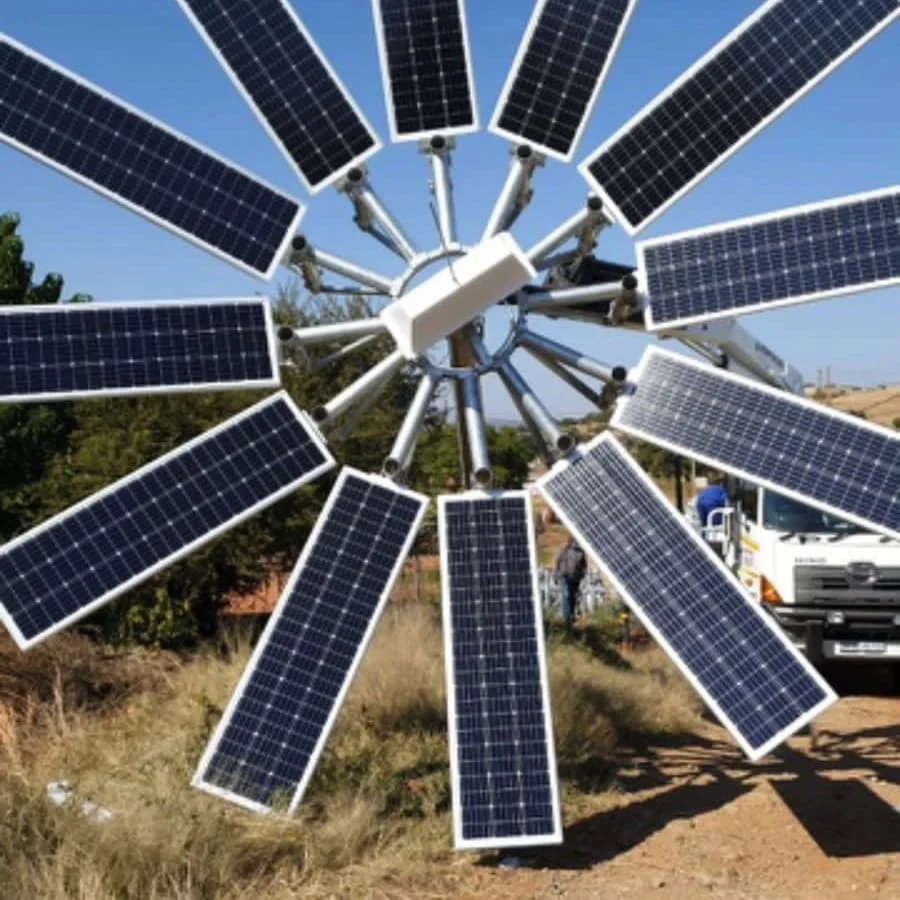
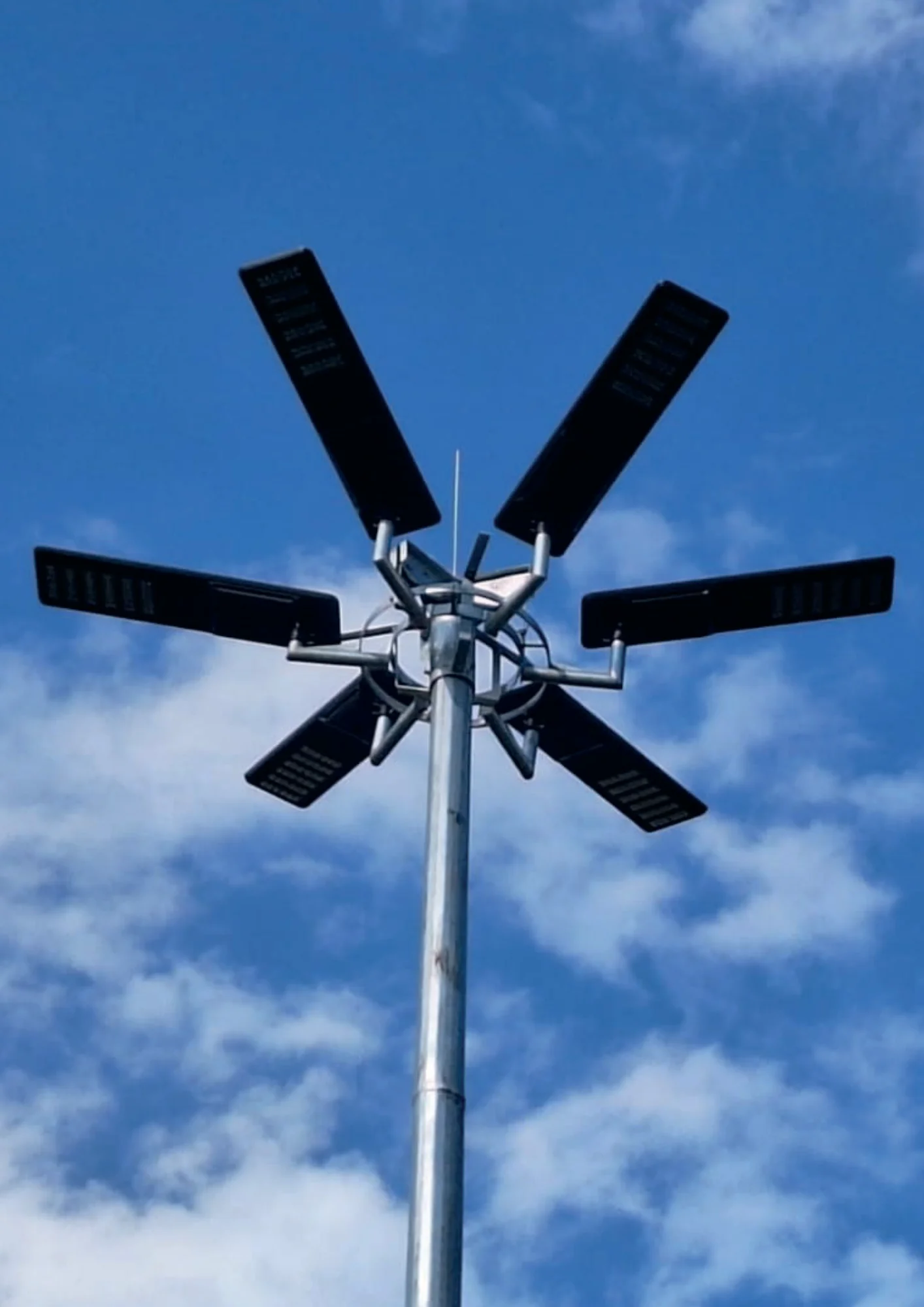
Solar high mast lighting is a system where solar panels, batteries, and LED luminaires are mounted onto a high mast structure to provide off-grid illumination.
Instead of relying on electrical infrastructure, these systems generate and store their own energy. Solar panels capture sunlight during the day, which is stored in batteries and used to power lighting at night.
A typical system includes:
Each component works together to deliver consistent, reliable lighting in environments where access to power is limited.
These systems are often considered alongside solar lighting poles and solar lighting towers, depending on the scale and lighting requirements of the project.
Solar high mast lighting is well suited to environments where grid power is limited or unreliable, including:
In smaller applications, solar street lighting may be used, while high mast systems are better suited to larger areas requiring wider coverage.
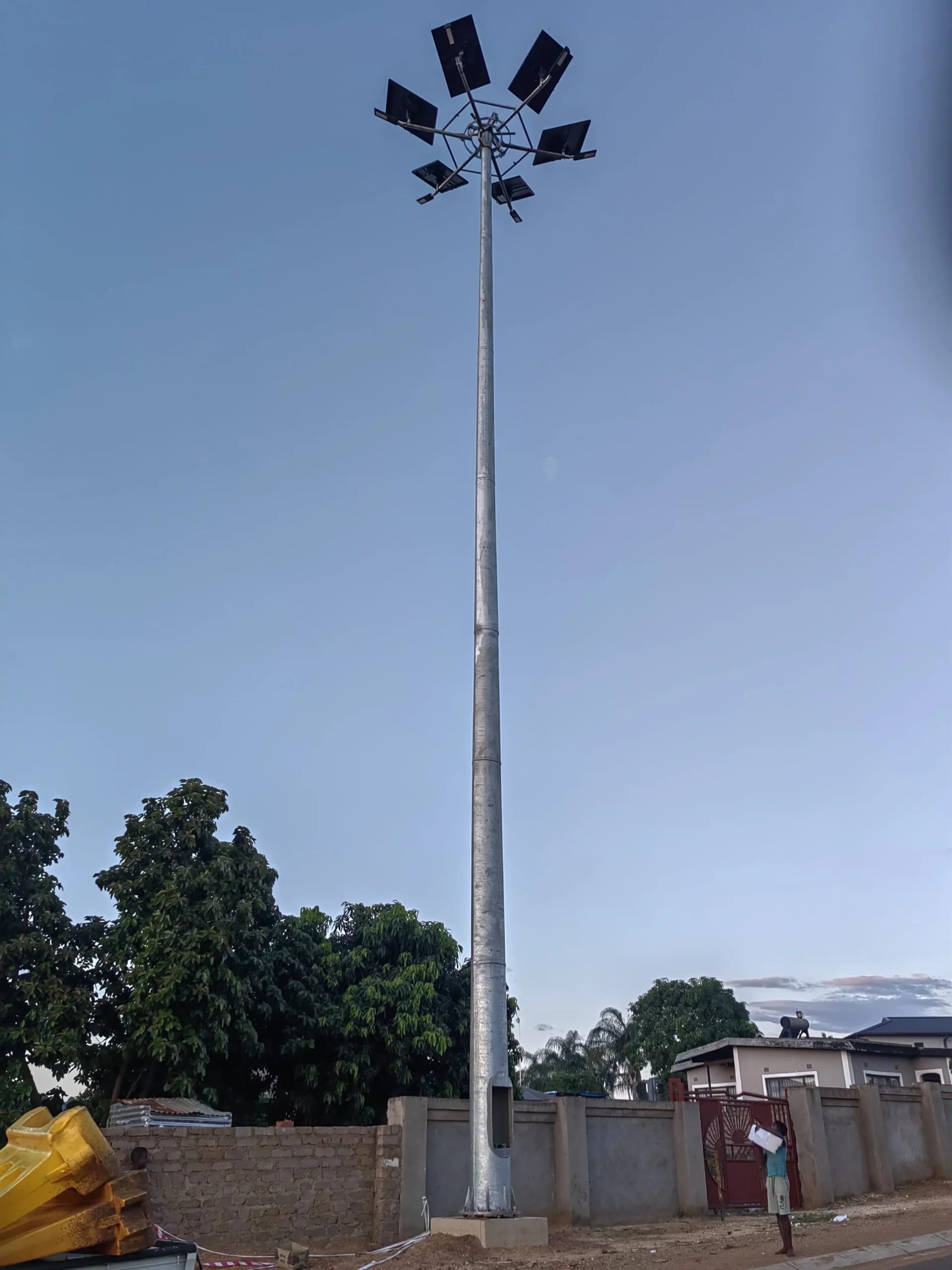
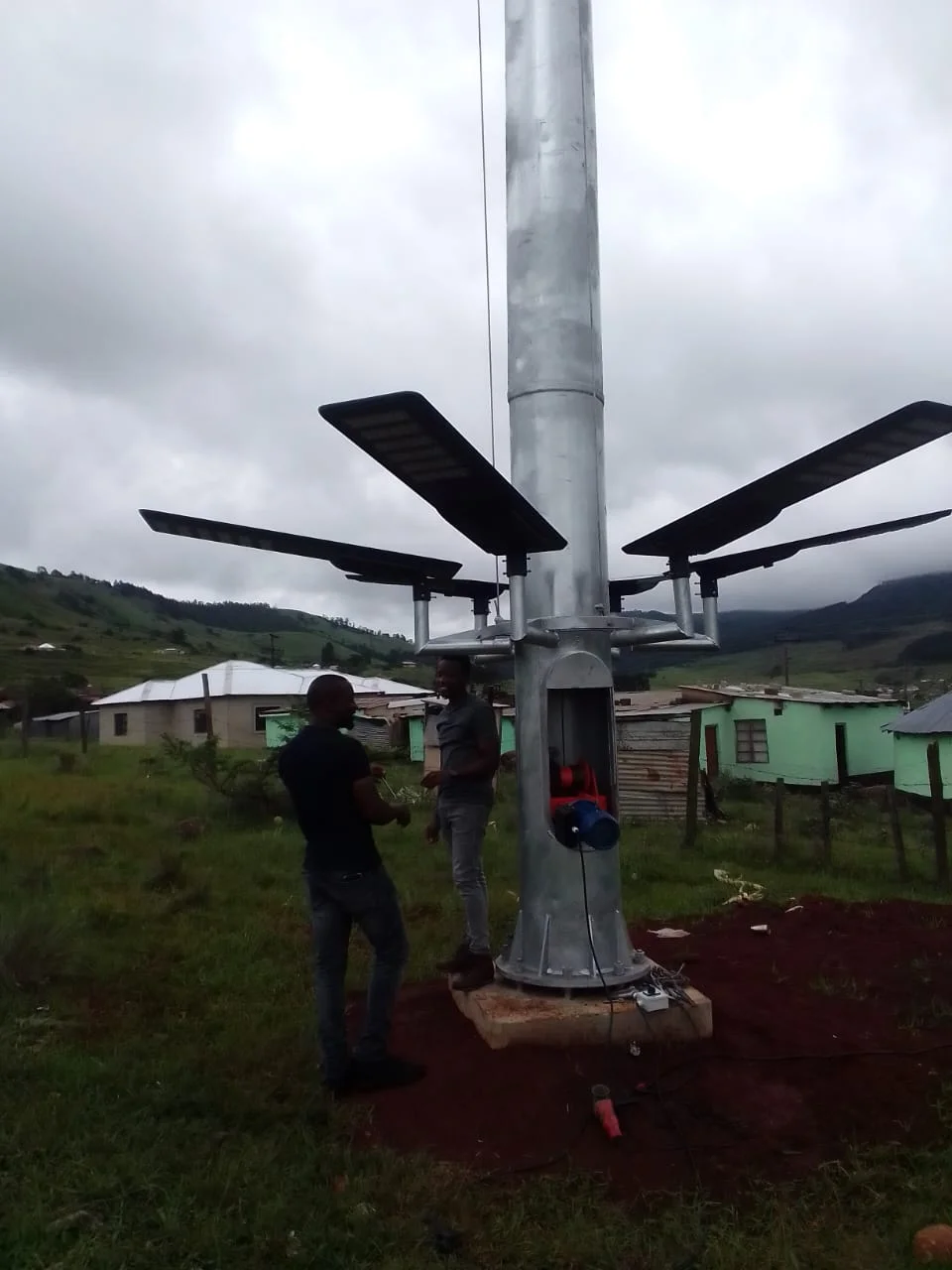
Global High Mast has delivered solar high mast installations in rural areas, providing reliable lighting where traditional power solutions are not feasible.
Installation of 20m Solar High Masts – Rural Project, Limpopo
These projects demonstrate how solar lighting systems can perform consistently while reducing reliance on grid-based power.
As infrastructure expands into more remote areas, the need for flexible and efficient lighting solutions continues to grow.
Solar high mast lighting allows projects to move forward without delays related to power availability, while also reducing long-term operational costs.
It provides a practical, scalable solution for developers, municipalities, and contractors working in off-grid environments where reliability is critical.
Solar high mast lighting offers a reliable and efficient solution for lighting remote infrastructure. By combining durable mast structures with renewable energy systems, it removes many of the challenges associated with traditional lighting.
For projects where access to power is limited, it provides a dependable alternative that supports both operational requirements and long-term sustainability.
Looking to implement solar high mast lighting for your next project?
Get in touch with our team to discuss a solution tailored to your site requirements.