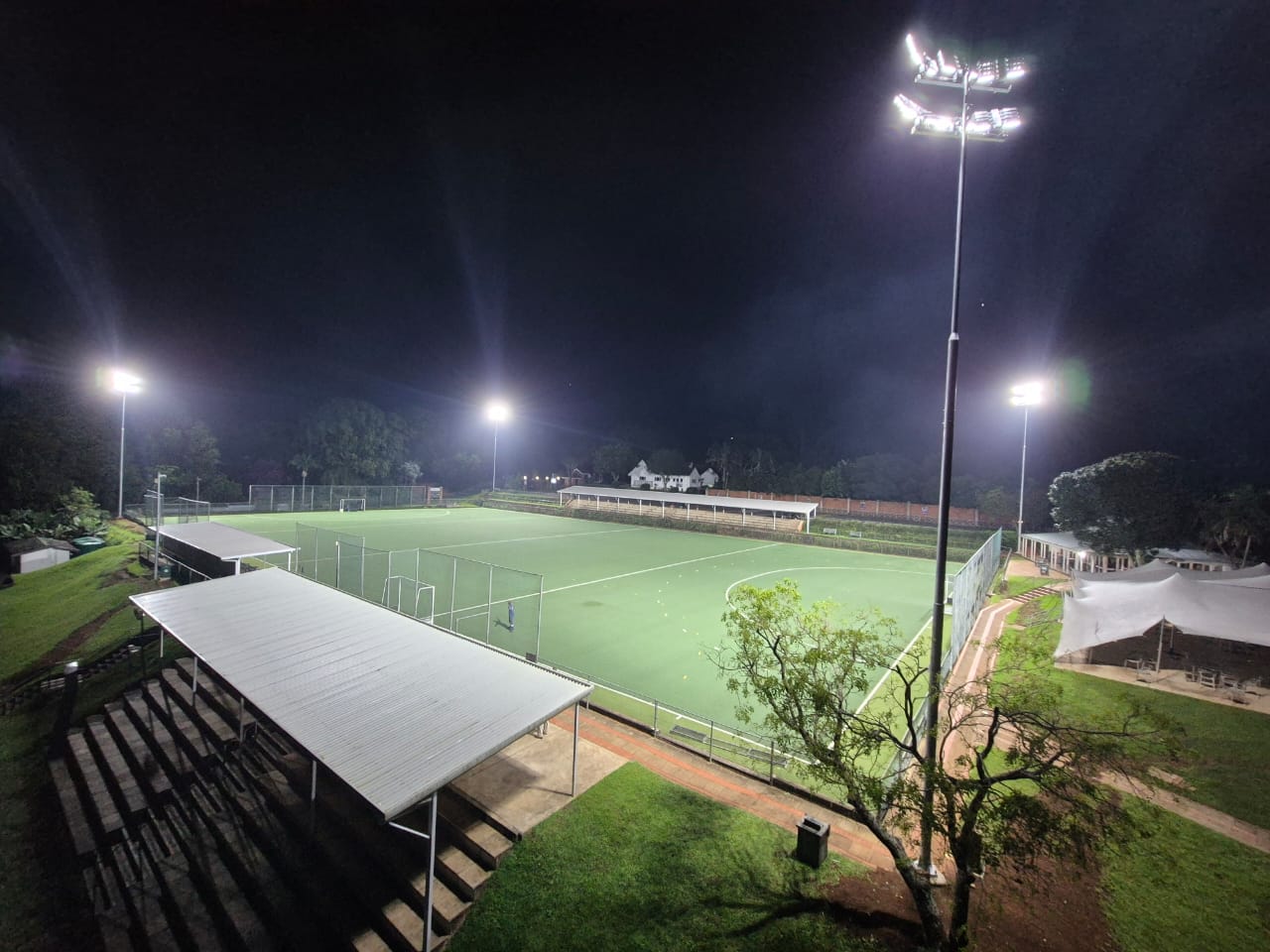
Choosing the right lighting solution is an important part of planning any large infrastructure, industrial or municipal project.
Across South Africa, high mast lighting plays an important role in keeping roads, mines, logistics facilities, industrial sites and public spaces safe and operational after dark. Whether you’re developing new infrastructure or upgrading an existing facility, the right lighting solution can improve visibility, increase safety and reduce long-term operating costs.
Unlike conventional street lighting, which relies on multiple shorter poles, high mast lighting provides wide, consistent illumination from fewer strategically positioned structures. This makes it an efficient solution for large outdoor areas where reliability and performance are essential.
In this guide, we’ll explain what high mast lighting is, how a high mast lighting system works, where it’s commonly used across South Africa and what to consider when selecting the right solution for your project.
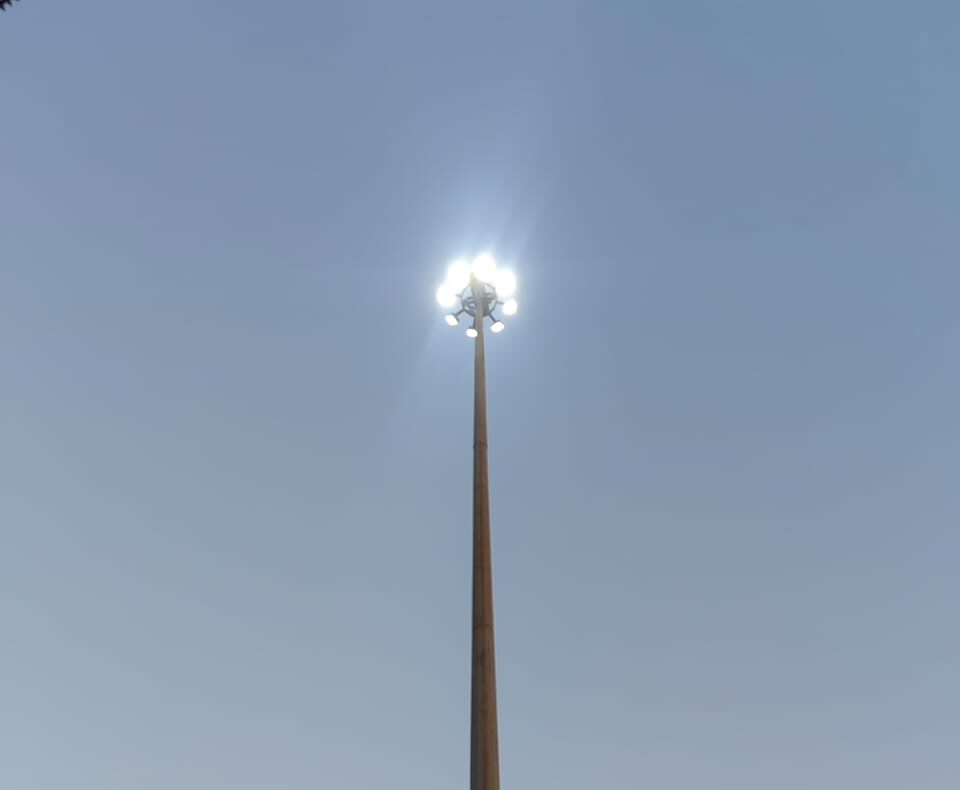
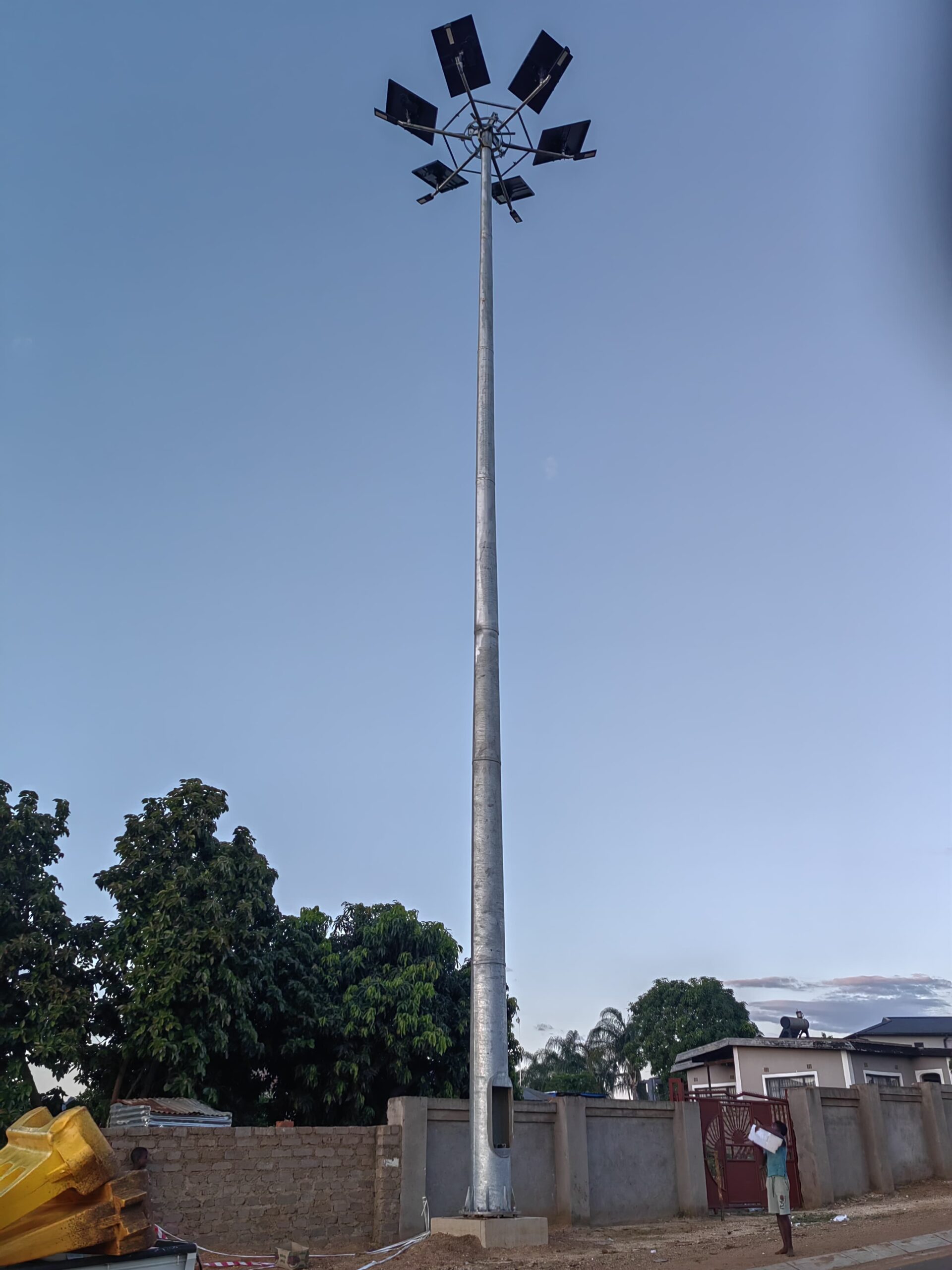
High mast lighting is a large-area lighting system that uses tall steel masts fitted with multiple luminaires or floodlights.
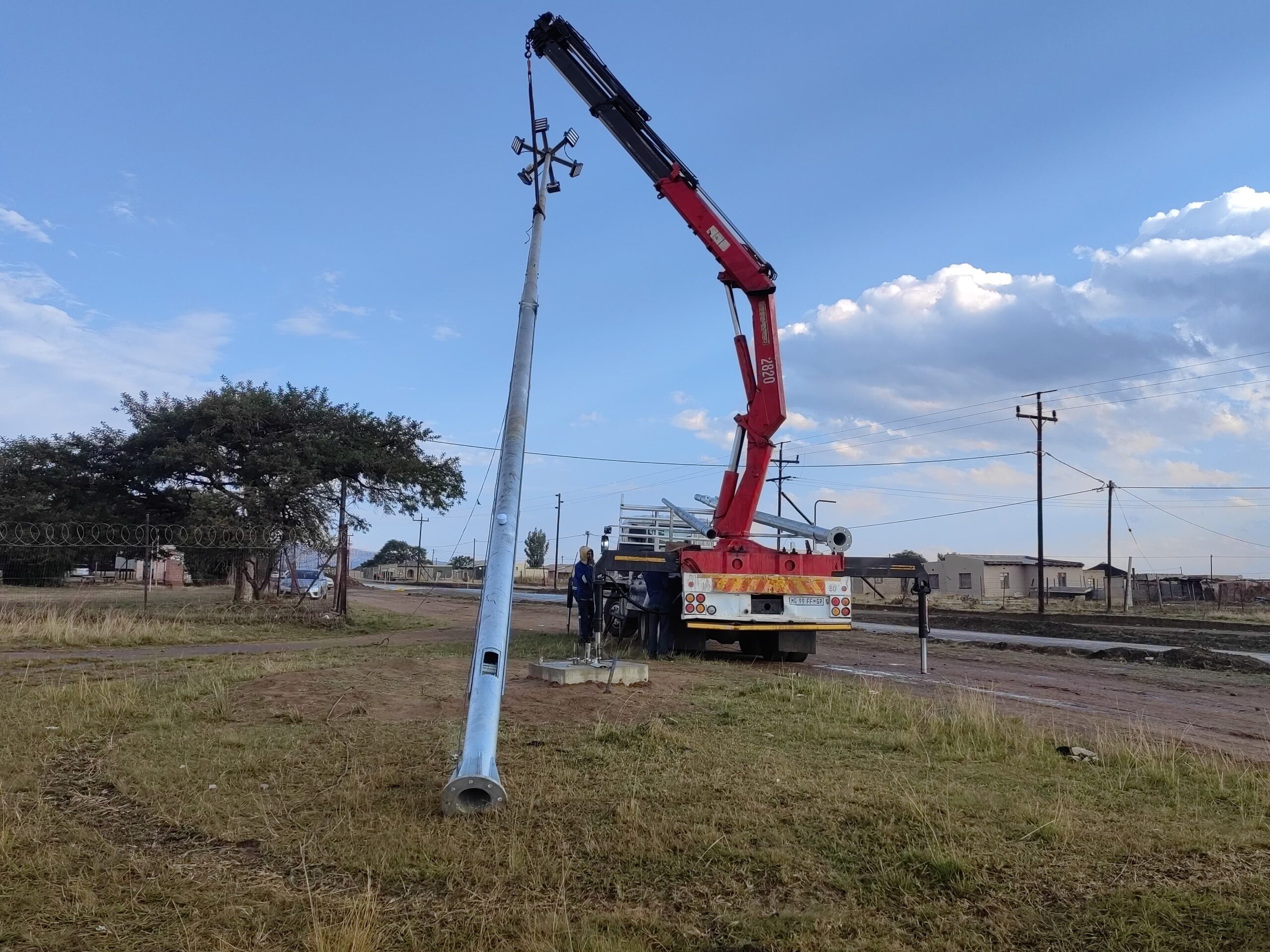
The luminaires are mounted on a headframe at the top of the mast and positioned to distribute light across a broad area. Depending on the application, high mast structures typically range between 20 and 40 metres in height.
Unlike conventional street lighting, which generally uses shorter poles positioned at closer intervals, a high mast light is designed to illuminate much larger spaces from a single location.
This makes high mast lighting ideal for projects where wide, uniform light coverage is required while minimising the number of poles needed across the site.
High mast lighting is used across a wide range of South African industries and infrastructure environments.
Common applications include:
Each application has different operational requirements. A lighting system for a mine in Limpopo, for example, will face different environmental and maintenance challenges from one designed for a municipal road in Gauteng or a logistics hub in Durban.
For this reason, the mast height, lighting layout, structural design and foundation requirements should always be determined according to the conditions of the individual site.
A high mast lighting system consists of several components that work together as a complete structure.
While the design may differ from one project to another, most systems include a steel mast, foundation, headframe, luminaires and a maintenance access system.
The steel mast forms the structural backbone of the system.
It must support the headframe and luminaires while withstanding wind loading, weather exposure and the long-term demands of an outdoor installation.
High mast poles are manufactured from structural steel and hot-dip galvanised to provide long-term corrosion protection in demanding environments.
The required mast height and structural specifications will depend on factors such as:
A properly engineered mast is designed as part of the overall lighting solution rather than simply as a standalone steel structure.
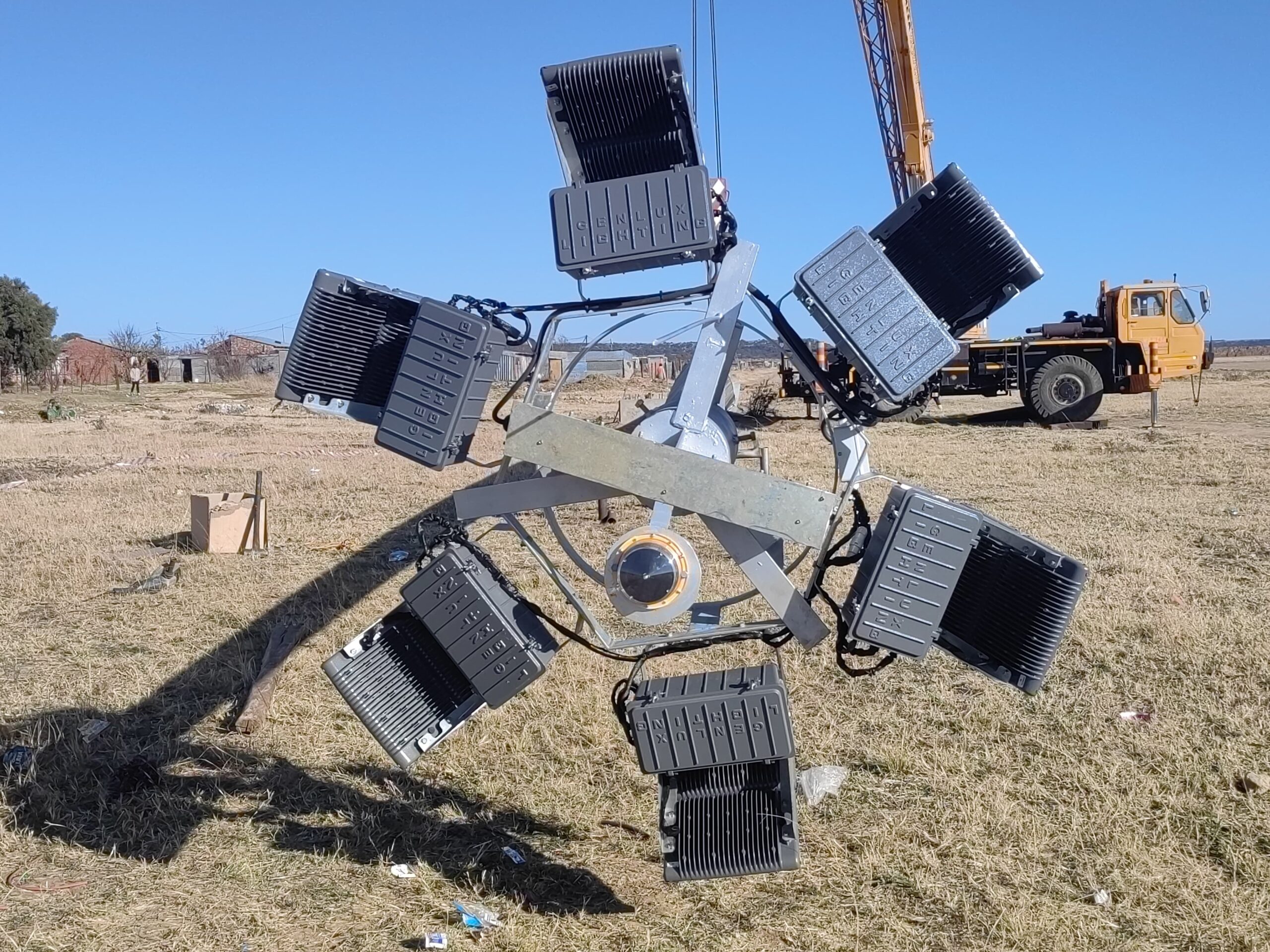
The headframe is mounted at the top of the mast and supports multiple luminaires.
The number, wattage, beam angle and positioning of each luminaire are carefully selected to achieve consistent light distribution across the required area.
Modern high mast lighting systems typically use LED luminaires because they provide improved energy efficiency, longer operating life and reduced maintenance compared with older lighting technologies.
A well-designed lighting layout helps minimise glare, reduce dark spots and provide consistent illumination across the site.
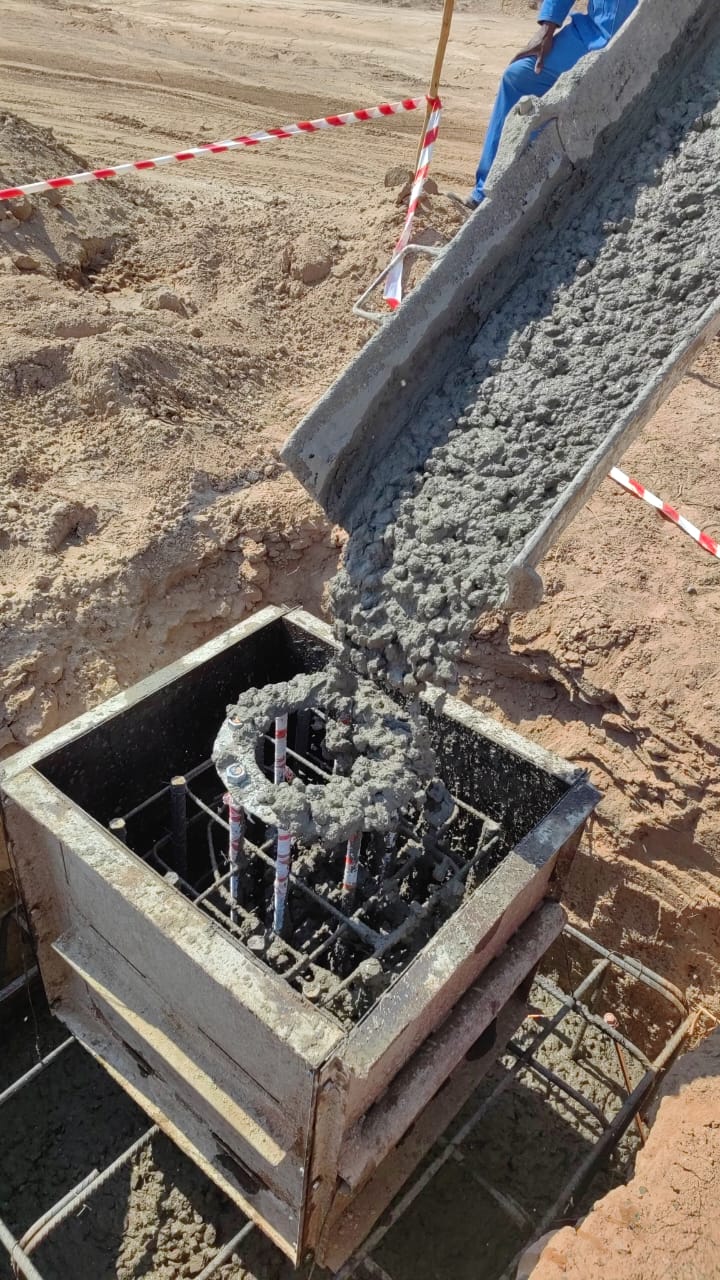
Every successful high mast installation begins below ground.
The foundation provides the stability needed to support the mast and must be engineered according to the height and weight of the structure, soil conditions and expected wind loads.
Ground conditions can vary significantly across South Africa. A project in a coastal environment may have very different engineering requirements from one in a mining region or inland industrial development.
Proper geotechnical assessment and foundation design are therefore critical to ensuring the long-term performance and safety of the installation.
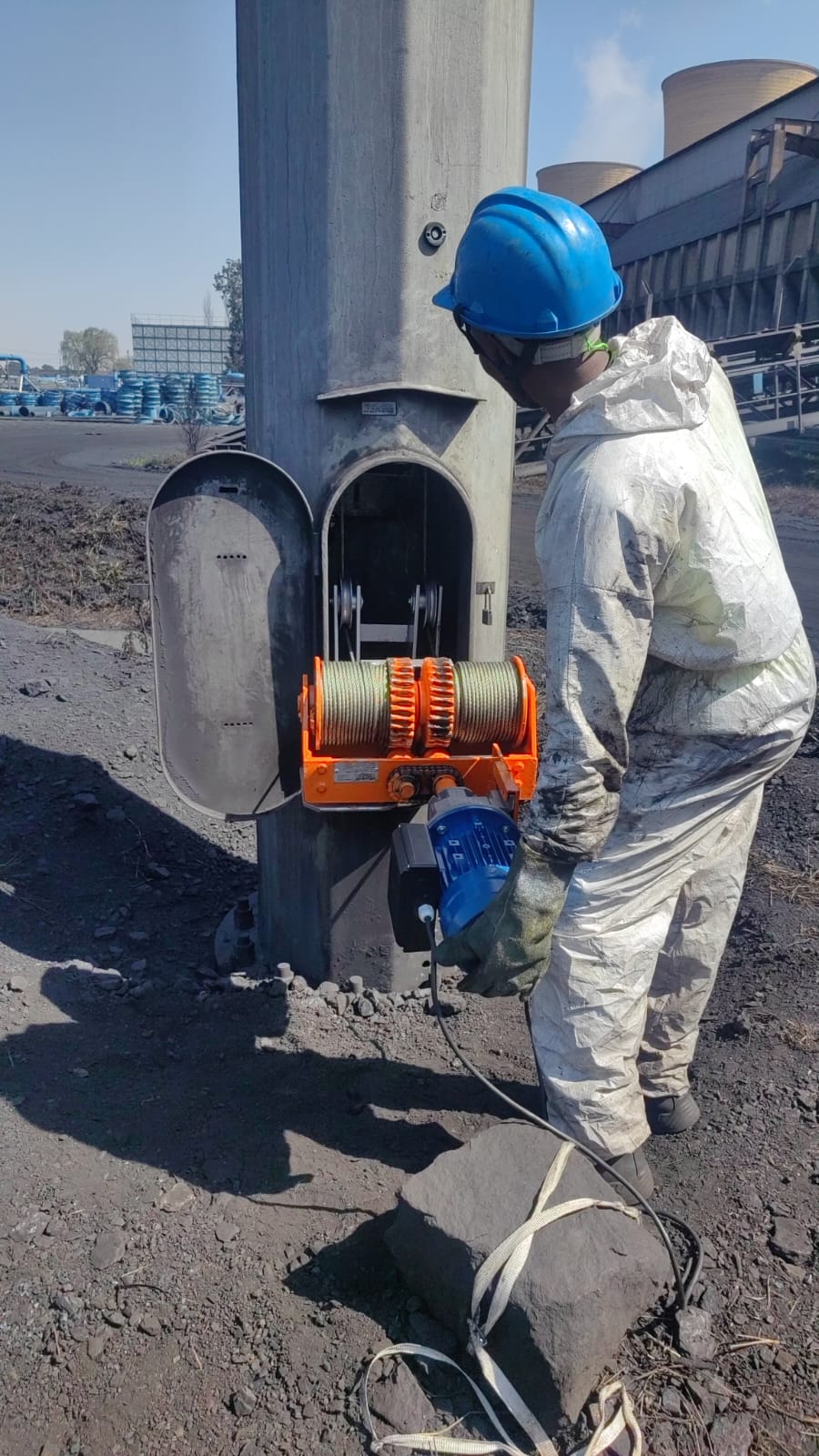
Many high mast lighting systems include a raising and lowering mechanism that allows the headframe to be safely lowered to ground level.
This makes routine inspections, servicing and luminaire replacement easier while reducing the need for specialised access equipment.
Ground-level maintenance not only improves efficiency but also enhances safety for maintenance teams working on large infrastructure projects.
High mast lighting offers several advantages over conventional lighting systems for large outdoor environments.
A single high mast can illuminate a much larger area than a conventional lighting pole.
This allows fewer structures to be used across the site while maintaining consistent lighting levels.
Because each mast provides broader coverage, fewer poles may be required.
Depending on the project, this can reduce the amount of cabling, trenching, foundations and associated infrastructure needed.
Consistent lighting improves visibility for motorists, pedestrians, workers and machinery operators.
This is particularly important in high-traffic industrial environments, municipal infrastructure and mining operations where safety is a priority.
Where raising and lowering systems are incorporated, maintenance can often be carried out from ground level.
Combined with modern LED technology, this can reduce both maintenance frequency and operational disruption.
No two projects are identical.
High mast lighting systems can be customised to suit the site’s operational requirements, including mast height, luminaire configuration, foundation design and maintenance access.
This flexibility makes them suitable for a wide variety of South African infrastructure projects.
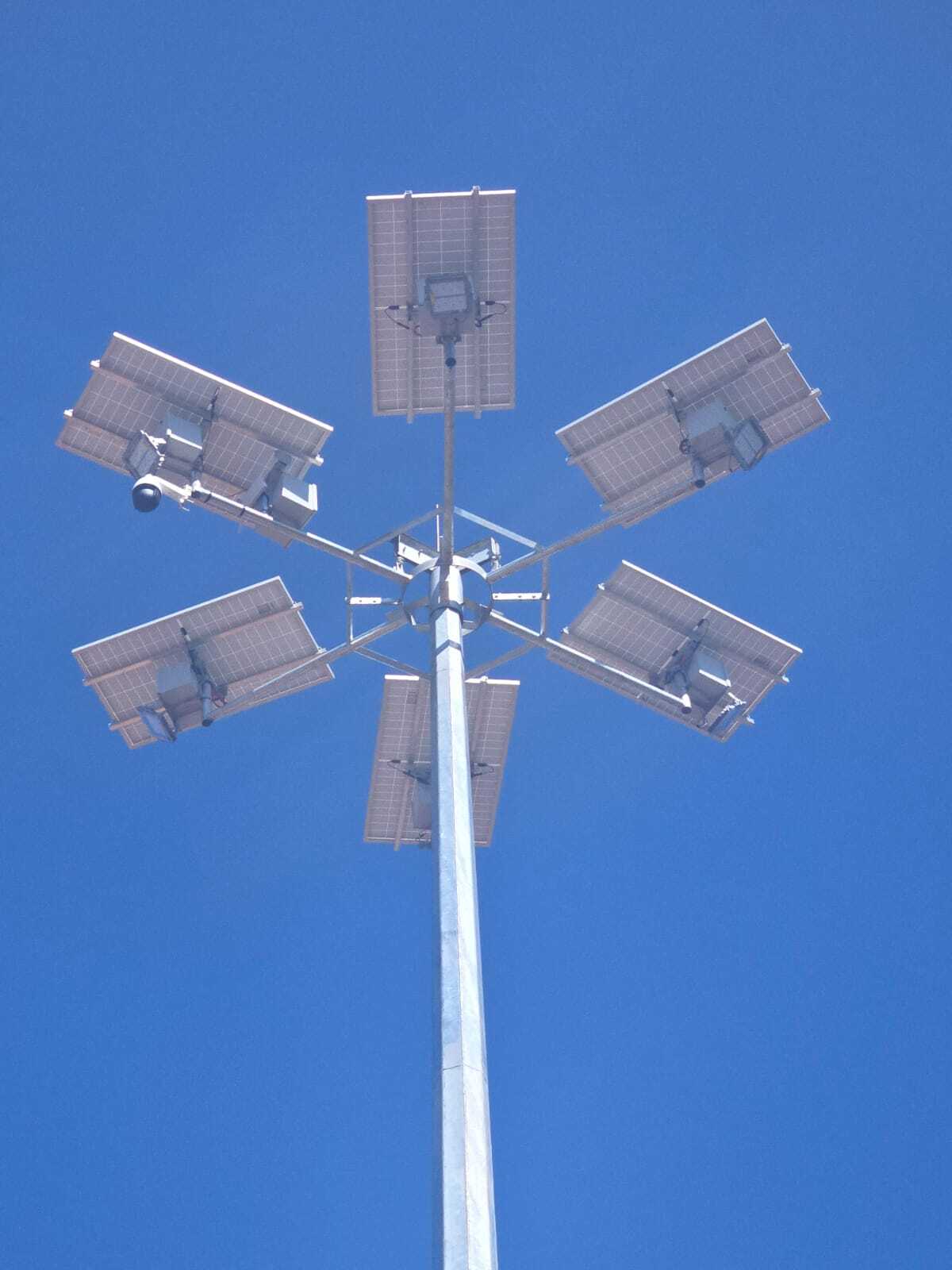
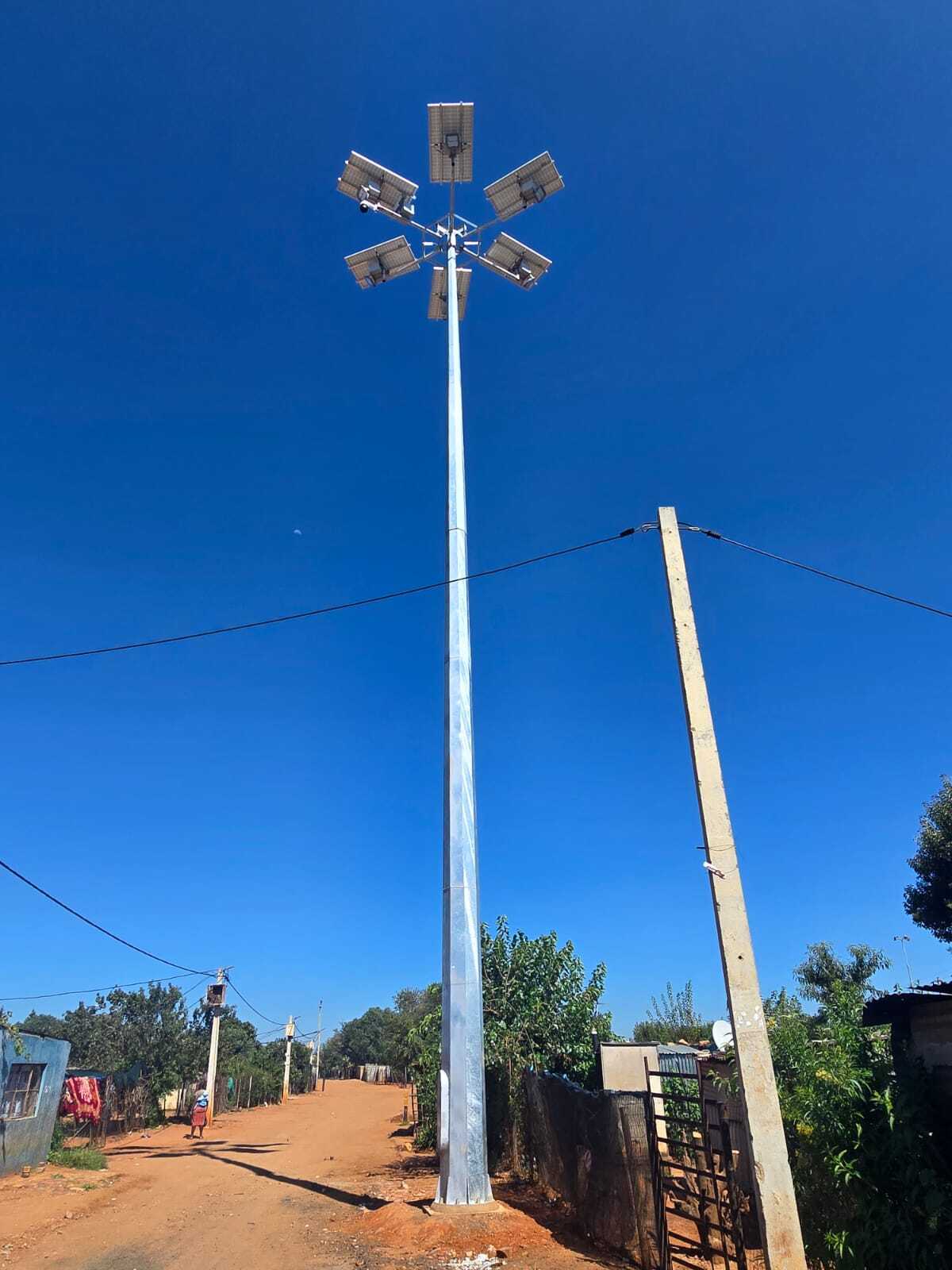
Solar high mast lighting is becoming an increasingly practical option for sites where access to the electricity grid is limited, unreliable or costly to establish.
Across South Africa, many mining operations, agricultural facilities, rural developments and infrastructure projects are located far from existing electrical networks. Extending grid power to these sites can require extensive trenching, underground cabling and significant investment, making conventional electrical connections impractical in some cases.
A solar high mast lighting system combines solar panels, battery storage and energy-efficient LED luminaires to deliver reliable illumination without relying entirely on the national grid.
Solar high mast lighting may be suitable for:
The suitability of a solar solution depends on factors such as the required lighting levels, available solar resource, battery capacity and site conditions.
A properly engineered system considers more than the mast itself. The solar panels, batteries, luminaires, controls and structural components must work together to provide reliable long-term performance.
Learn more about our High Mast and Steel Pole Solutions here.
Although both systems are designed to improve visibility and safety, high mast lighting and conventional street lighting serve different purposes.
Conventional street lighting is typically used along roads, residential areas and smaller public spaces where shorter poles can be installed at regular intervals.
High mast lighting, on the other hand, is designed for large, open spaces where wide, consistent illumination is required from fewer mounting points.
The right solution will depend on factors such as:
In many large infrastructure developments, a combination of high mast lighting and conventional street lighting provides the most effective outcome.
Selecting the right high mast lighting system involves far more than choosing a pole height.
Every project has unique structural, environmental and operational requirements that should be considered before installation begins.
The size, shape and purpose of the site will influence how many masts are required and where they should be positioned to achieve the desired lighting coverage.
Different applications require different illumination levels.
For example, a logistics yard, sports facility and municipal intersection each have different lighting standards and operational needs.
The mast, headframe and luminaires must be engineered to withstand the wind conditions expected at the installation site.
Proper structural design helps ensure long-term safety and performance.
Foundation design should always reflect the local ground conditions and the structural loads imposed by the mast.
Ground conditions vary significantly across South Africa, making proper site investigation an important part of the design process.
Factors such as coastal conditions, industrial pollution, dust, moisture and temperature fluctuations may influence material selection and protective coatings.
Routine inspections and servicing should be considered during the design phase.
Systems that incorporate raising and lowering mechanisms can simplify maintenance while reducing downtime.
The availability and reliability of electrical infrastructure will help determine whether a conventional or solar high mast lighting system is the most suitable solution.
For remote sites throughout South Africa, solar high mast lighting may provide a practical and cost-effective alternative.
Working with an experienced manufacturer helps ensure these considerations are addressed as part of a complete, integrated solution.
Global High Mast provides complete SANS Certified high mast and steel pole solutions for municipal, industrial, mining and commercial projects throughout South Africa.
From engineering and in-house fabrication to delivery, installation and maintenance, our experienced team manages every stage of the project lifecycle.
By offering a complete turnkey service, we help clients maintain quality, consistency and accountability from concept through to commissioning.
Whether your project requires conventional high mast lighting, solar high mast lighting or a custom steel pole solution, every system is designed to meet the unique requirements of the site and deliver reliable long-term performance.
A high mast light is a tall steel lighting structure fitted with multiple luminaires that illuminate large outdoor areas from a single mounting point.
High mast poles typically range between 20 and 40 metres in height, depending on the application, lighting requirements and site conditions.
High mast lighting is commonly used on highways, municipal roads, mining operations, industrial facilities, logistics centres, ports, airports, parking areas and sports facilities throughout South Africa.
High mast lighting provides wide area coverage, improved visibility, fewer poles, reduced infrastructure requirements and more efficient maintenance compared with conventional lighting systems.
Yes. Solar high mast lighting is an effective solution for remote locations where extending the electrical grid may be impractical or cost prohibitive.
Yes. Every project should be designed according to the site’s structural, environmental and operational requirements, including mast height, foundation design, wind loading, lighting layout and maintenance access.
Whether you’re lighting a municipal road in Gauteng, a logistics hub in Durban, a mining operation in Limpopo or a renewable energy facility in the Northern Cape, selecting the right high mast lighting solution can improve safety, reduce maintenance and deliver long-term value.
At Global High Mast, we design, manufacture and install high mast lighting systems throughout South Africa, providing turnkey solutions tailored to each project’s unique requirements.
Whether you’re in the early planning stages or ready to begin your next project, our team can help you find the right solution for your site.
Contact us today to discuss your high mast lighting requirements.